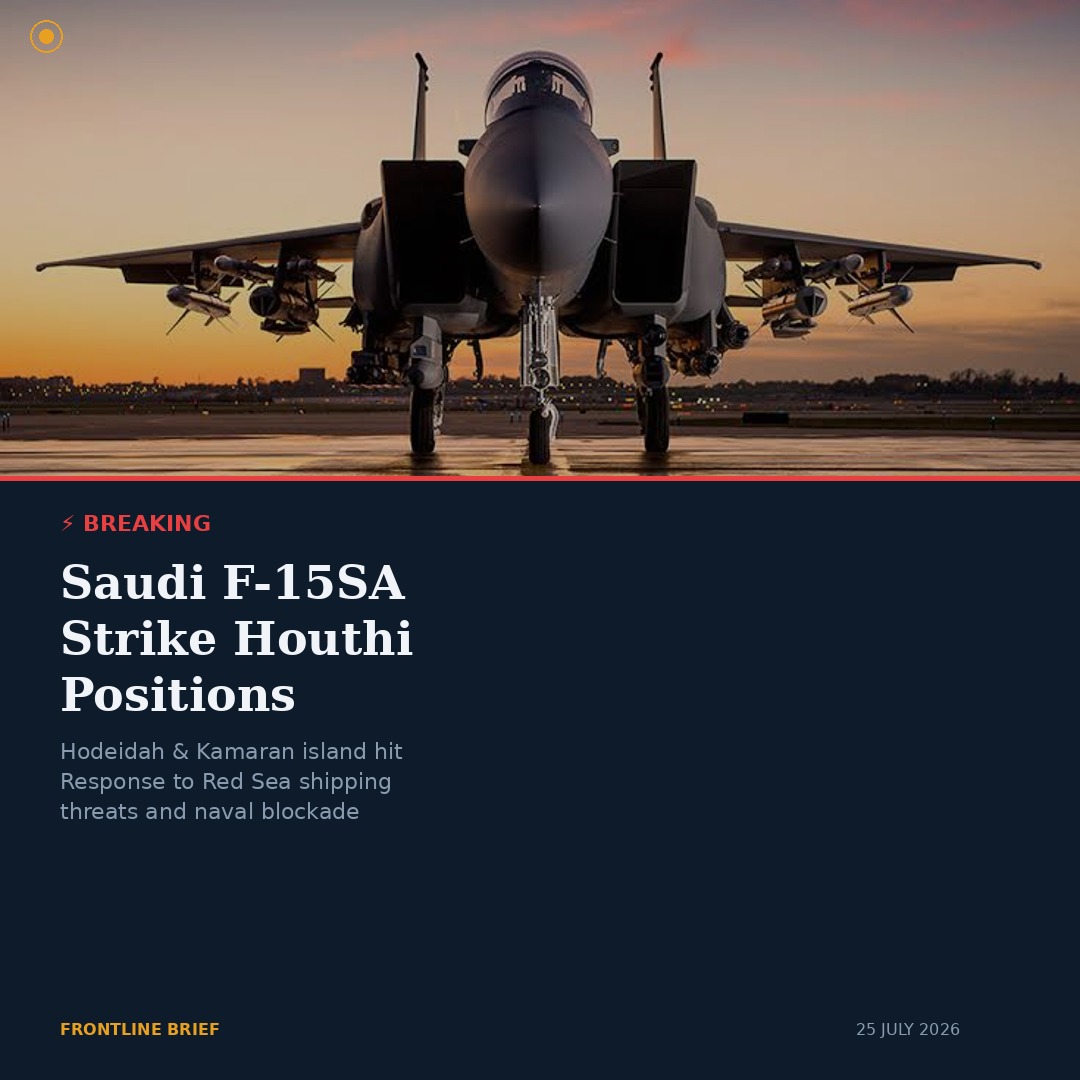
Saudi counter-strike
The Royal Saudi Air Force launched air strikes late on Friday 24 July against Houthi rebel positions in western Yemen, deploying F-15SA Strike Eagle multirole fighters as the spearhead of the operation. The coalition spokesperson confirmed that the strikes targeted military installations and infrastructure used to threaten international shipping in the Red Sea.
The Houthis confirmed that bombardments struck the Hodeidah area and the island of Kamaran, while Saudi media reported that the port of Hodeidah itself was not targeted and continues to operate normally. Security sources speaking to Reuters described strikes on rebel positions, while the Saba news agency reported damage to telecommunications installations. Residents reported powerful explosions, though no casualties have been confirmed so far.
Red Sea escalation
The operation came just days after the Houthis announced a unilateral naval blockade of Saudi Arabia — a significant escalation of their campaign against Gulf states. Since late 2023, the Houthis have conducted persistent attacks against commercial shipping in the Red Sea and the Bab el-Mandeb strait, initially framed as solidarity with Gaza but increasingly targeting vessels with no connection to Israel.
Riyadh's decision to strike directly at Houthi military infrastructure marks a notable shift. Saudi Arabia had largely disengaged from the Yemen conflict following the 2023 ceasefire negotiations, but the Houthi blockade declaration — combined with continuing missile and drone attacks against Saudi territory — has forced the Kingdom back into an active military posture. The F-15SA, the most advanced variant of the Strike Eagle in service anywhere, gives the RSAF a precision strike capability that the Houthis have no means to counter in the air.